Albert Einstein maintained the practice of administering identical examinations to his students year after year. When questioned regarding this methodology, he offered a profound observation: “The questions remain constant—the answers evolve.” In our contemporary secular world, advanced knowledge and technology have fundamentally transformed our approaches to information processing and time management. However, in the spiritual realm, both the process and the answers remain immutable. The analog methodology persists. This constitutes the divine design. Rabb’s (God) design ordains that growth happens progressively, stage by stage.
Digital Disconnection
Our primary deficiency is evident: digital dependence has cultivated intellectual and spiritual indolence. We have persuaded ourselves that electronic correspondence, whether through email or messaging applications, constitutes meaningful outreach, that social media announcements fulfill our obligation to establish genuine connections. The empirical evidence, however, reveals a different reality. Substantive human encounters have been supplanted by digital representations. As Albert Einstein insightfully cautioned, “our technology has exceeded our humanity.”
We have substituted technological interfaces for authentic human engagement, thereby abandoning the foundational principle upon which humanity was established: genuine interpersonal connection. The spiritual life continues to demand exertion, dedicated effort, ittiqa (spiritual ascension and progress), and the active cultivation rather than passive acquisition of virtue. The Promised Messiah(as) taught that Islam uplifts humanity to attain its inherent essence and spirit through gradual growth and steady progression. The Promised Messiah(as) explained that nothing spiritual can be attained instantly, everything takes place in stages, similar to planting a seed and waiting for it to bloom. This principle of ittiqa emphasizes that spiritual evolution is a journey requiring patience, consistent effort, and divine grace.
The ultimate goal being as Allah said in the Holy Quran to The Prophet(sa) to: ” Say, ‘My Prayer and my sacrifice and my life and my death are all for Allah, the Lord of the worlds.
“Qul inna salati wa nusuki wa mahyaya wa mamati lillahi rabbil ‘alamin – (6:163).
Lost in the Technology Maze
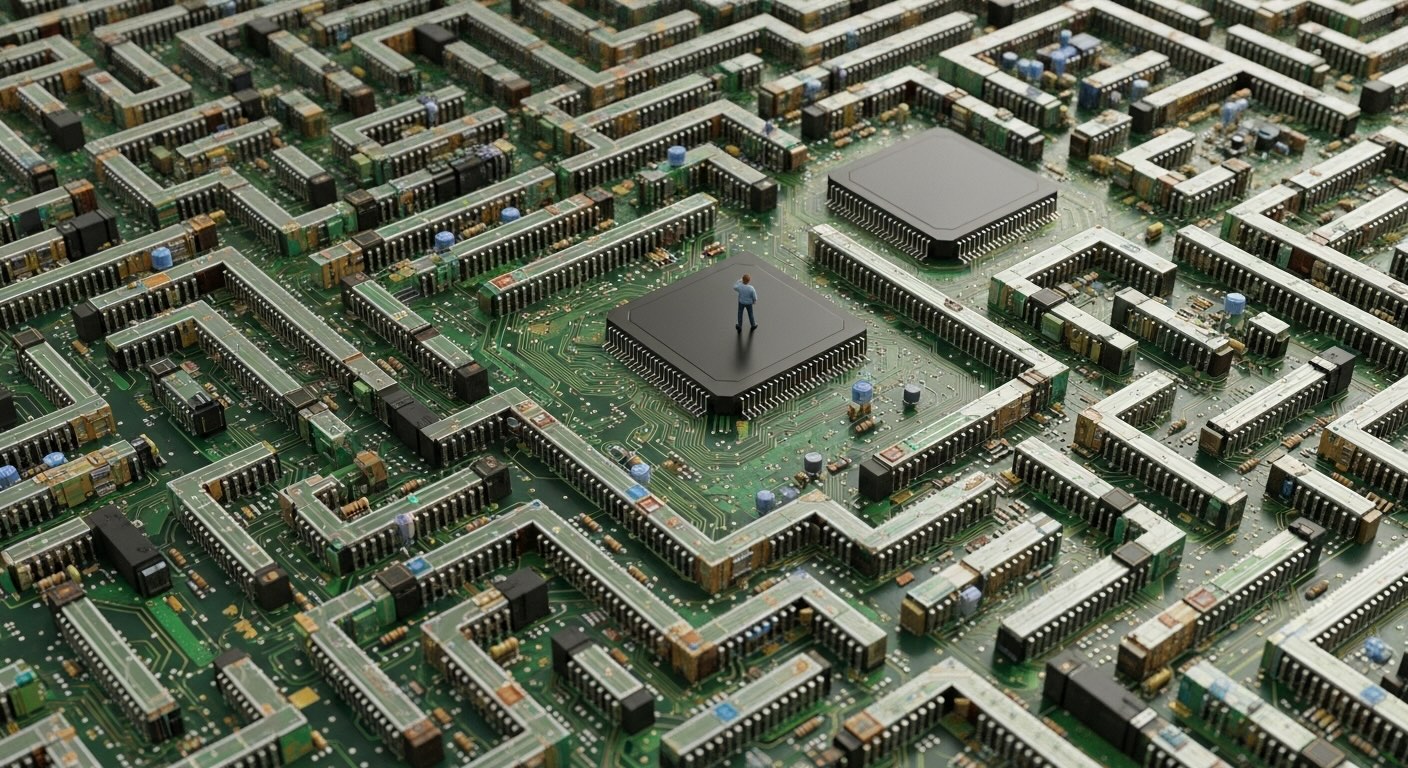
Digital technology was designed to expedite secular tasks, thereby allocating additional time and enhanced capacity for concentrated spiritual development. Instead, we have become disoriented within a technological maze, losing sight of our fundamental objectives. The concept of signal-to-noise ratio from communication theory provides an apt analogy for this predicament. Our essential priorities, the “signal”, become obscured by extraneous “noise.”
The signal encompasses what genuinely matters: cultivating meaningful relationships with family and friends, pursuing substantive work or academic endeavors, and fostering spiritual growth through worship and introspection. The noise comprises perpetual distractions: compulsive engagement with social media, professional anxieties, digital notifications, and trivial concerns that divert attention from the present moment.
The Enduring Path to Virtue
Moral values cannot be downloaded; they must be uploaded and cultivated through traditional means. Through disciplined effort. Through Salat and supplication. Through association with individuals who embody righteousness and wisdom. (9:119) Through acts of kindness, compassionate counsel, and gentle guidance.
It becomes incumbent upon us to maintain vigilance over our spiritually distant brethren. Sustain communication. Offer prayers on their behalf. The divine grace will facilitate their return to the path of rectitude. We endeavor and experience repeated failure. We are finite beings aspiring toward ideals, yet incapable of attaining the ideal state. This reality should not discourage us; rather, it should engender humility and compel us toward supplication. As Allah instructs:
Wastaghfir lidhanbika wa sabbih bihamdi rabbika – “And ask forgiveness for thy frailty and glorify thy Lord with His praise” (40:56).
Establishing a Salat-Centric Lifestyle
Spiritual advancement necessitates the intentional amplification of signal while minimizing noise through the establishment of a Salat-centric existence. The Quran provides fundamental guidance:
Qad aflaha al-mu’minun, alladhina hum fi salatihim khashi’un – “Successful indeed are the believers, who are humble in their Prayers” (23:2-3).
This verse emphasizes khushu (profound humility and presence) as essential to spiritual success, wherein Salat transcends ritualistic observance to become focused communion with the Divine.
Humility opens the door. Salat walks through it. And in that sacred space and at that sacred time , Providence meets Servitude and transformation happens.
Allah further instructs:
Inna as-salata tanha ‘anil fahsha’i wal munkar – “Surely prayer restrains one from indecency and manifest evil” (29:46).
Practical application requires safeguarding prayers at their prescribed times, utilizing them to recalibrate one’s daily existence. Salat is the spiritual technology meticulously designed to rewire our consciousness until living in Allah’s presence becomes our default state, our natural rhythm. When this consciousness takes root, Salat transcends being merely five discrete acts and becomes a perpetual state, extending prayer-consciousness into every moment of daily life.
allazeena hum ala salatihim daimoon, “those who are in a constant state of prayer” (Surah al-Ma’arij 70:24).
The Straight Path Demands Continuous Motion
The Promised Messiah(as), in his exegetical commentary on Surah Fatiha, devoted particular attention to the supplication:
Ihdinas-siratal mustaqim – “Guide us to the path of rectitude” (1:6).
Rectitude is not a static condition but rather an active, sustained pursuit of moral and spiritual excellence. The Promised Messiah identified istiqamat (steadfastness) as among the most exalted virtues precisely because it demands continuous spiritual exertion.
This journey toward moral perfection embodies an inherent paradox: the destination extends infinitely, yet the path requires incremental daily progress. Much as a cyclist must maintain continuous pedaling to preserve balance, the spiritual seeker requires perpetual momentum to avoid stagnation or deviation toward extremes. Herein lies the necessity of dynamic stability.
Technology possesses the potential to function as shaytan (satan) if permitted. We must maintain constant vigilance and exercise istiqamat, patient endurance and steadfastness. Steadfastness culminates in divine pleasure. The Promised Messiah designated this prayer as the Ism-e-Azam (the Greatest Name) of supplications, signifying that sincere pursuit of this prayer with complete mindfulness enables one to attain the zenith of their created purpose for both temporal and eternal existence.
The Proper Hierarchical Order
Ultimately, technology must retain its original function: that of servant. It must never supersede human conscience, and certainly never supplant our connection to the Divine. Indeed, we must continue to build, explore, invest in research, test the boundaries of knowledge, and innovate responsibly. However, we must invariably preserve the proper hierarchy:
- God guides Man
- Man commands the Machine
- The Machine serves the Mission.
What constitutes this mission? The pursuit of truth, the dissemination of enlightenment, and the cultivation of proximity to the Creator. A Salat-centric lifestyle facilitates disengagement from distractions and technology and reconnection with God.